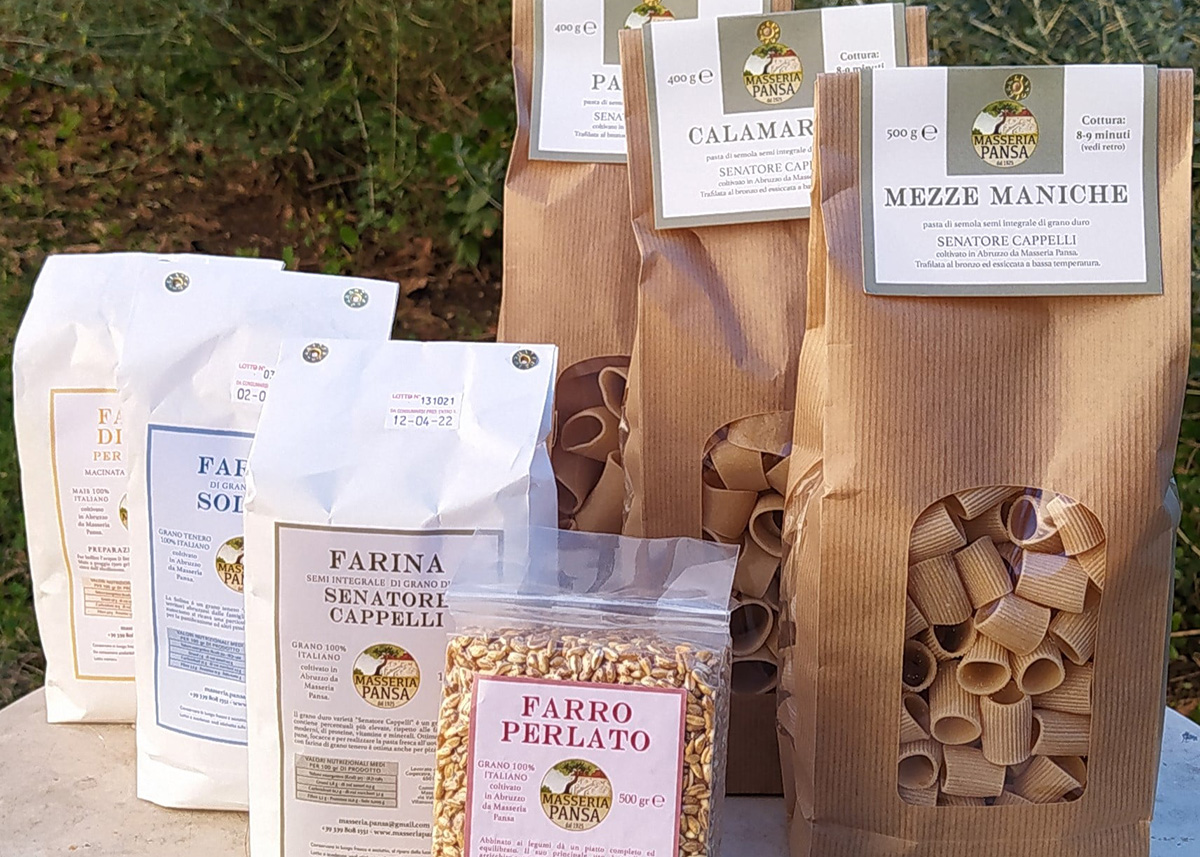
Pasta, a fundamental element of the Mediterranean diet, is a true world heritage. But it is important to know how to distinguish between the artisanal one, which has the highest control of raw materials and processing methods and the industrial one.
Industrial pasta is mostly made with wheat from large European or non-European granaries, while artisanal pasta is produced with the decidedly higher quality of local wheat.
In Italy, there are ancient grains (Senatore Cappelli) and native varieties (Solina in Abruzzo) that, almost completely forgotten, are now being recovered: another strong point of Italian pasta production and of the proposal of Masseria Pansa.
To make artisanal dry pasta, durum wheat is used: semolina, granulated wheat, and whole wheat. The latter two provide greater benefits to the body as they are particularly rich in nutrients.
They are also important the processing techniques: there temperature, which must never be higher than 38°, and the drying time, which must vary between three and six days. Another characteristic of artisanal pasta is the bronze wire drawing which gives the pasta its wrinkled and porous characteristic, allowing it to absorb the sauce better.