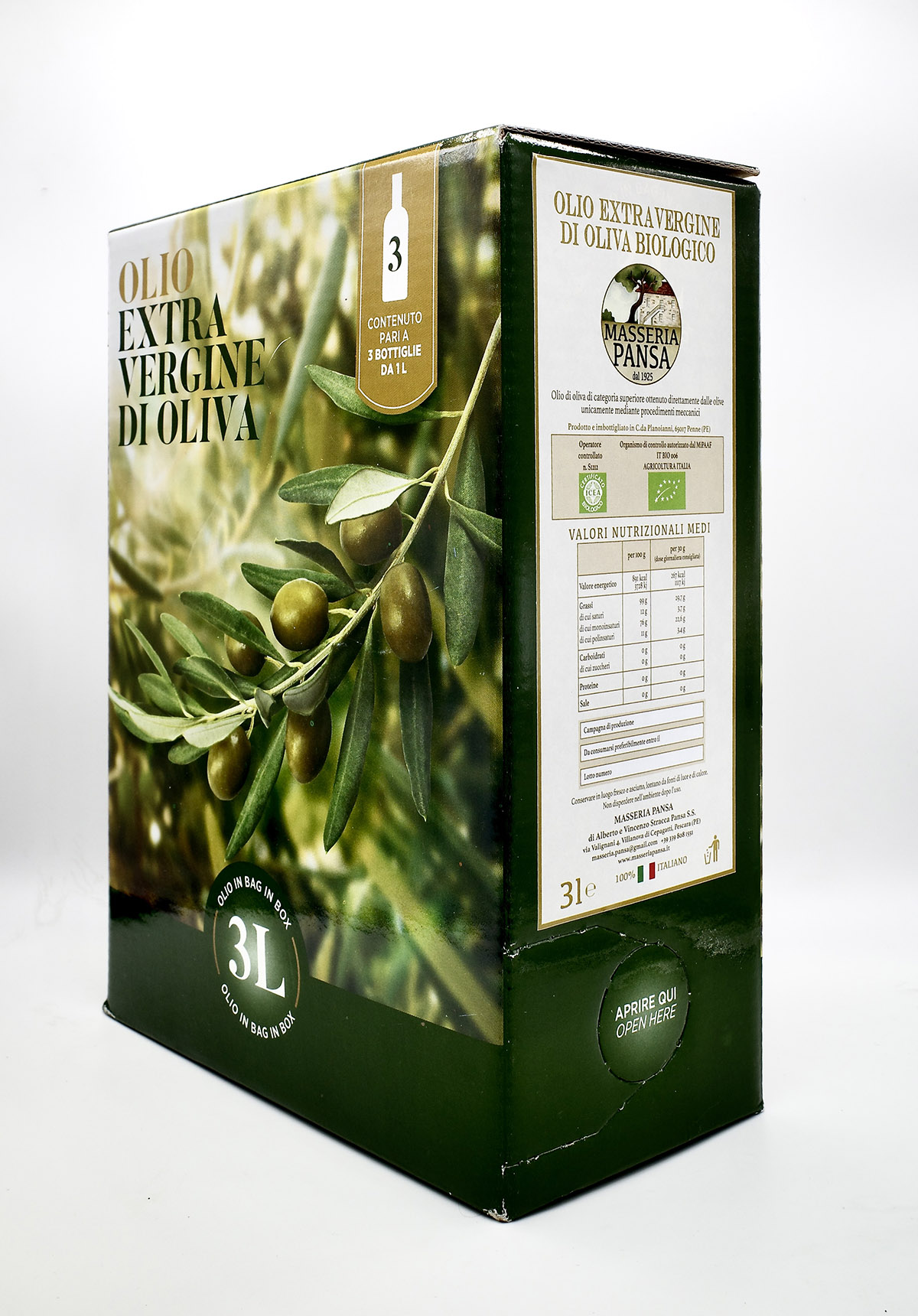
We've always been accustomed to seeing the classic oil can in our pantry, or under the kitchen sink. But, as often happens, as knowledge increases, so do the methods for preserving extra virgin olive oil. In this case, we're talking about the use of extra virgin olive oil, as has long been the case with wine and fruit juices, bag-in-box (literally “bag in the box”)
It is composed of 3 parts: one box cardboard box containing a bag (bag) produced with specific material for food and equipped with dispenser to drain the oil
Most oil producers now use this type of packaging. Many consumers, however, are reluctant to use it, perhaps because they associate this type of container with low-end wine. In reality, this method of preserving oil, like wine, has enormous advantages:
Mechanically resistant to impacts and, most importantly, does not risk rusting like cans. Easy to transport and ship, and fully recyclable.
Once opened, the can should be poured into dark bottles; it shouldn't be left half-opened, as oxygen is one of the enemies of extra virgin olive oil. With the bag-in-box method, however, the oil flows out of the dispenser, which is equipped with a non-return valve, and the vacuum-sealed bag "crumples" without the oil coming into contact with air.
The cardboard box (box) acts as an air chamber around the bag (bag), reducing the risk of thermal shocks which are another enemy, together with light and oxygen, of EVO oil.